

Vertical Lift Mobile Manipulator
Key Features of LIBRA
- Vertical Lifting of the Load
- Articulated arm for reaching different points in the work area
- Configurable operating working radius, up to 2 m in the configuration described
- Capacity of up to 120 kg at a 2-meter radius in the configuration shown
- Compact base, 850 × 850 mm
- Mobile and repositionable structure
- Options for fully pneumatic, electric, or electropneumatic configurations
- Suitable for controlled environments and clean rooms
- Custom-designed gripping equipment
- Ability to handle the load in different orientations
- Dimensions, performance, and geometries can be customized to suit different application
LIBRA
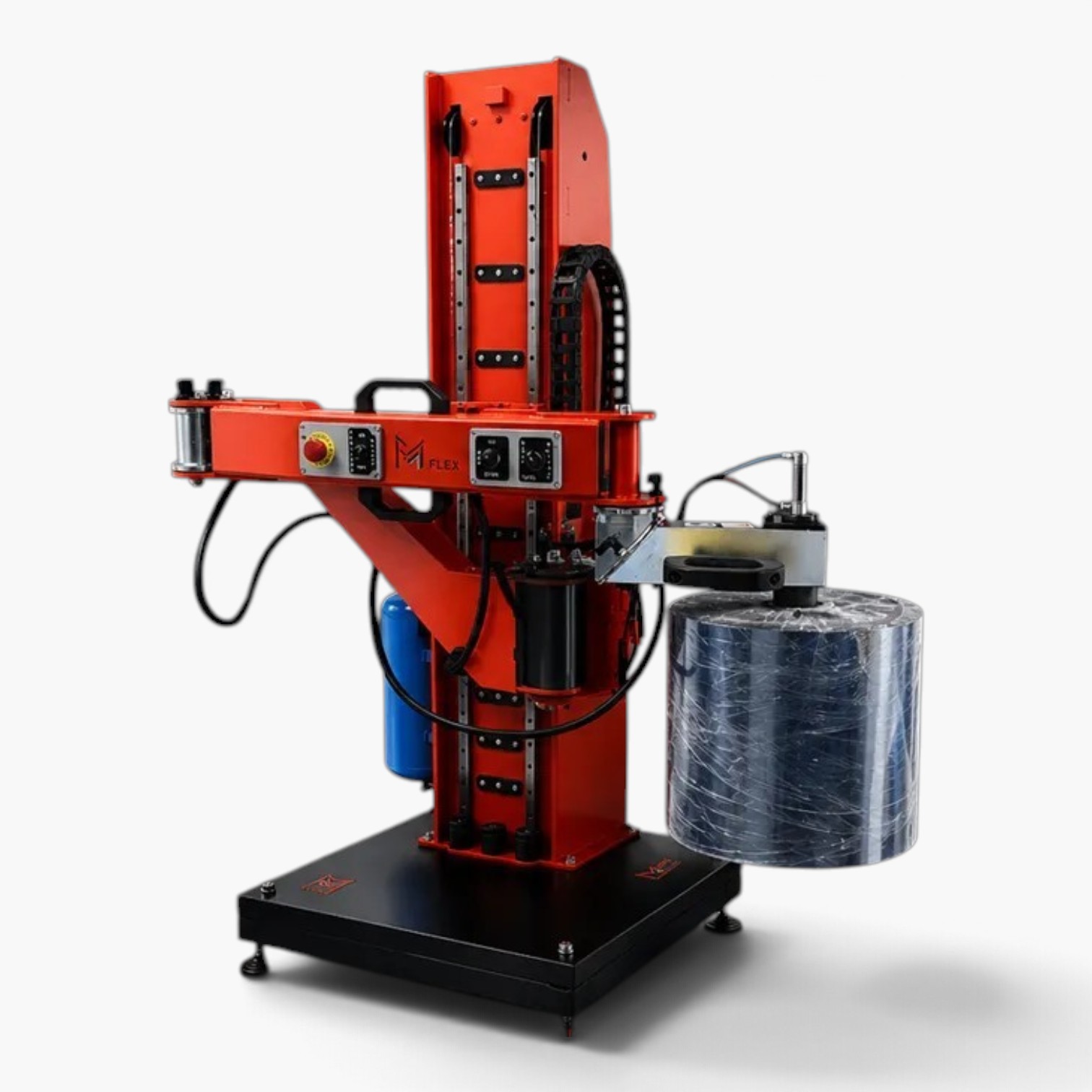
Compact manipulator with vertical lifting and an articulated arm
MANIFLEX’s LIBRA is a mobile vertical industrial manipulator designed for lifting, handling, and precisely positioning loads in production environments characterized by tight spaces, limited access, or specific operational requirements.
The compact design and the articulated arm with vertical lift make it possible to reach and handle the load while maintaining an extremely small footprint. Dimensions, capacity, operating radius, and gripping system can be designed and configured to suit the customer’s specific application.
LIBRA vertical lift mobile manipulator is therefore a particularly attractive solution when a traditional column-mounted manipulator is too bulky or when it is necessary to be able to move the handling system between different workstations.
Designed to work where space is limited
LIBRA, a mobile vertical column manipulator, was designed to address applications where simply lifting a load is not enough: the machine must be able to integrate into an existing production process while accommodating doors, passageways, low ceilings, machinery, production layouts, and confined work areas.
In one of the configurations developed by MANIFLEX, the vertical-column mobile manipulator was designed to operate inside a clean room with a maximum available height of just 2 meters, while maintaining an extremely compact footprint of 850 × 850 mm and an operating radius of up to 2 meters.
This configuration allows for the handling of loads up to 120 kg within a 2-meter operating radius.
Custom Gripping Equipment
One of the main advantages of the LIBRA manipulator is its ability to integrate different gripping systems, designed specifically for the component to be handled.
In the configuration shown, the manipulator is equipped with a specialized expander for handling coils, designed to accommodate coils with different inner diameters and to enable their handling and repositioning.
However, LIBRA can be configured with different equipment, such as:
- mechanical or pneumatic clamps
- coil clamps
- clamping systems for shafts or central holes
- suction cups
- magnetic systems
- Custom-designed special tools.
The equipment can also be designed to perform additional operations such as gripping, lifting, rotating, tilting, and switching between vertical and horizontal positions, depending on the requirements of the production cycle.
Applications and Target Industries
Depending on the equipment installed, LIBRA can not only lift the component but also control its orientation during handling.
This makes it possible, for example, to pick up a reel or a component in a vertical position and move it to a horizontal position, or to perform the reverse operation.
An important feature for processes involving:
- Loading and unloading machinery
- Production Line Feeding
- positioning on spindles
- coil handling
- assembly and preparation of components
A manipulator designed specifically for the application
LIBRA is not a standard machine to which the process must be adapted.
It is the manipulator that is configured around the process.
MANIFLEX analyzes the component’s weight and geometry, the gripping point, the required movements, the available height, the operating radius, any obstacles present, and the characteristics of the production environment.
Based on this, the following can be customized:
height of the structure, base dimensions, lifting capacity, radius of the articulated arm, vertical stroke, pneumatic system, gripping equipment, and methods for rotating and handling the load.
This makes it possible to develop a custom solution even for applications where a standard industrial robot cannot be installed


